
← The Ultimate Guide to Inventory Accuracy
Understanding Inventory Shrinkage: Paper Errors vs. Physical Loss
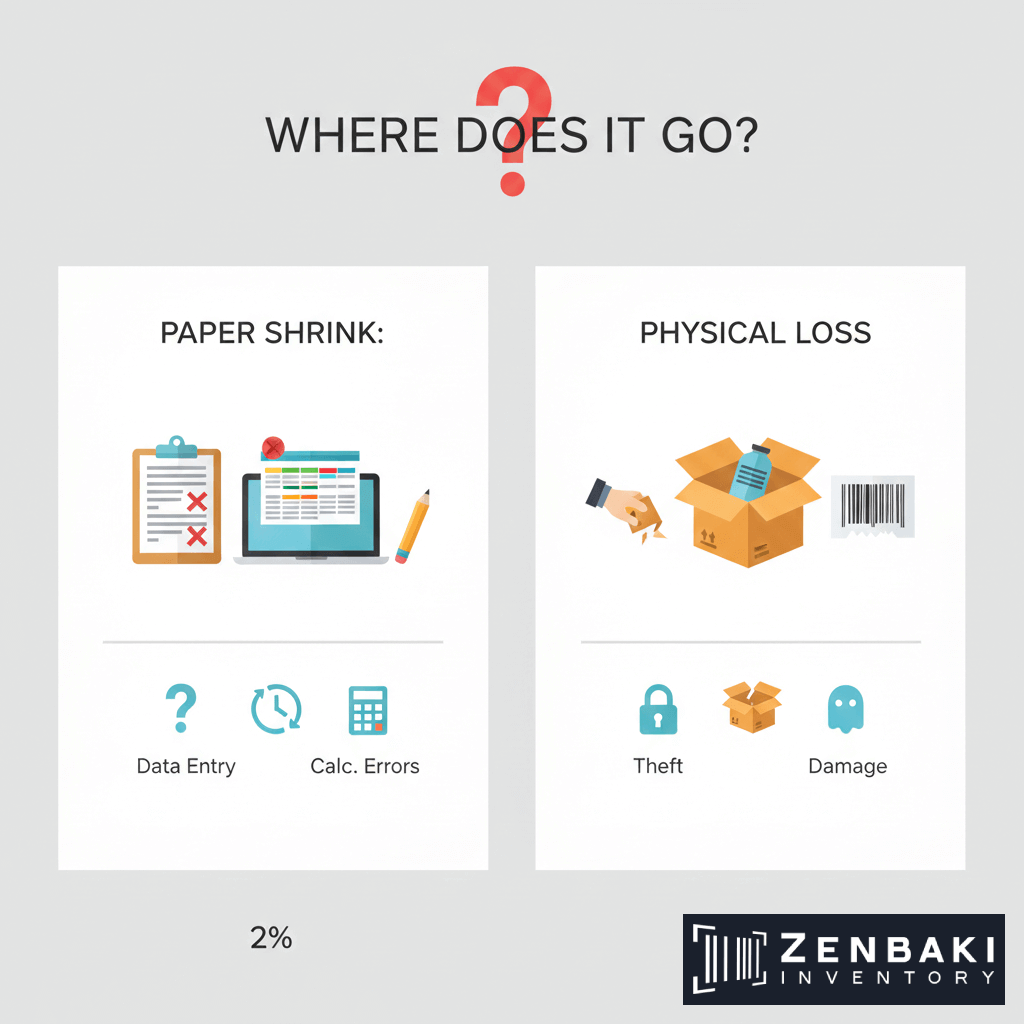
Inventory "shrinkage" is the gap between the stock your computer says you have and what is actually sitting on your shelves. It is a silent profit killer. According to industry standards, even a 1% shrinkage rate can represent thousands of dollars in lost revenue. However, not all shrinkage is caused by theft. In fact, a large percentage of discrepancies are actually "Paper Shrink", the result of bad data, not bad people.
What is Physical Shrink?
Physical shrink is when the item is literally gone. This includes:
- Theft: Both internal employee theft and external shoplifting.
- Damage: Items that were broken in the warehouse but never recorded as "spoiled" or "written off."
- Vendor Fraud: Being billed for 100 units but only receiving 95 on the pallet.
What is Paper Shrink (Administrative Error)?
Paper shrink occurs when the inventory exists, but the records are wrong. This is often more common than theft. Examples include:
- Unit of Measure Errors: Counting a "box of 12" as "1 unit."
- Data Entry Mistakes: A warehouse worker typing "100" instead of "10."
- Misplaced Stock: The items are in the warehouse, but they are in the wrong bin, so the system thinks they are missing.
How a Professional Count Identifies the Source
A professional inventory counting service doesn't just give you a final number; they provide a discrepancy report. By looking at the "variance," professionals can spot patterns. For example, if all the "missing" items are from the same vendor, you likely have a receiving problem. If the missing items are high-value electronics, you likely have a security problem.
Reducing Shrinkage Through Accountability
The mere presence of a third-party inventory team often reduces "Physical Shrink" simply by creating a culture of accountability. When employees know a professional audit is coming, "sweethearting" (giving away free items to friends) and casual theft drop significantly. For "Paper Shrink," a professional audit cleans the database, giving your team a fresh, accurate starting point to maintain better habits.